
Interlock Kits
Panel interlock options where equipment and code requirements allow.

Portable generator hookup in Missouri gives homeowners a safer way to use portable backup power during outages. Ray's Electrical installs transfer equipment, interlock kits where appropriate, and dedicated connections that keep generator use controlled.
Portable power still needs careful electrical planning. Local customers count on Ray's for safe, plain-language help.
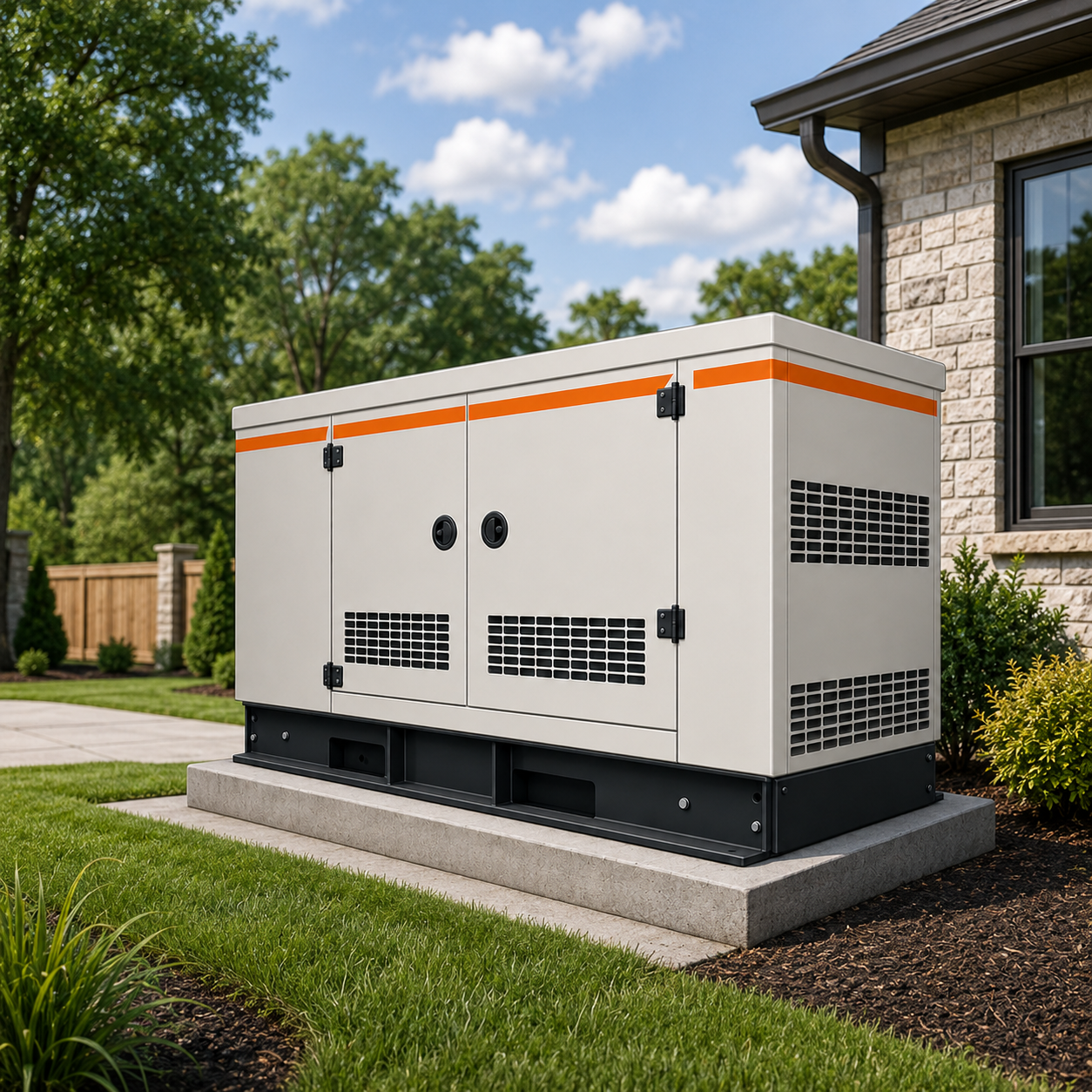
A portable generator hookup provides a safer connection point between your portable generator and selected home circuits. It avoids extension cord clutter and helps prevent dangerous backfeeding when installed with the right transfer equipment.
This option can be a practical fit when you want to run essentials during an outage but are not ready for a whole-home standby generator.
Panel interlock options where equipment and code requirements allow.
Manual transfer equipment for selected circuits and portable backup power.
Exterior generator inlet boxes and wiring for safer, cleaner generator use.
Generator connections are designed to avoid backfeeding and risky shortcuts.
Ray's explains transfer switches, interlocks, inlets, and what fits your panel.
Electrical connections are installed by a licensed and insured electrician.
Choose portable backup or step up to standby power when it makes sense.
These answers cover common planning, safety, cost, and scheduling questions.
Ray's Electrical reviews your panel, major appliances, HVAC equipment, well pump, refrigeration, lighting, and other essential circuits before recommending generator size.
Yes. Ray's Electrical is Kohler certified and installs standby generator equipment with transfer equipment, load planning, and clean electrical workmanship.
Generator installation can include load review, placement planning, transfer switch or interlock installation, conduit, wiring, grounding, panel work, testing, and owner guidance.
Yes. A transfer switch or approved interlock setup keeps generator power separated from utility power and helps protect the property, equipment, and utility workers.
A properly sized standby generator can power many or all home loads, but the right setup depends on your panel, HVAC, appliances, well equipment, and budget.
Yes. Many homeowners choose essential circuits such as heat, refrigeration, lights, internet equipment, a well pump, garage doors, and selected outlets.
Generator placement depends on manufacturer clearances, windows, doors, fuel access, service access, drainage, noise concerns, and the route back to the electrical equipment.
Many installations take one to two workdays after equipment, placement, fuel coordination, and any needed electrical preparation are ready.
Yes. Ray's Electrical installs portable generator hookups, transfer switches, and approved interlock setups when they fit the panel and local requirements.
No. Backfeeding without approved transfer equipment is dangerous because it can energize utility lines, damage equipment, and create serious shock hazards.
Some homes need panel repairs, space corrections, service upgrades, or transfer equipment changes before generator installation can be completed safely.
Yes. Ray's Electrical can review business loads, shop circuits, refrigeration, lighting, office equipment, and other critical systems for backup power planning.
A standby generator should be exercised, inspected, and maintained according to manufacturer guidance so it is ready when an outage occurs.
Yes. A planned generator setup can reduce downtime during storms by restoring selected circuits or whole-home power automatically or through a safe manual process.
Call Ray's Electrical at (417) 241-5722 or use the contact page. Share your location, outage concerns, and what you want to keep powered.
Read the latest practical guidance from Ray's Electrical for safer panels, circuits, and electrical work.
Learn the safe amp rating for 12-gauge copper wire, the correct breaker size, continuous-load limits, and common wiring mistakes to avoid.
Read the guideCompare current, voltage, resistance, failure behavior, formulas, and everyday uses in series and parallel electrical circuits.
Read the guideCompare backup duration, operating cost, maintenance, noise, solar compatibility, and whole-home power before choosing a backup system.
Read the guide